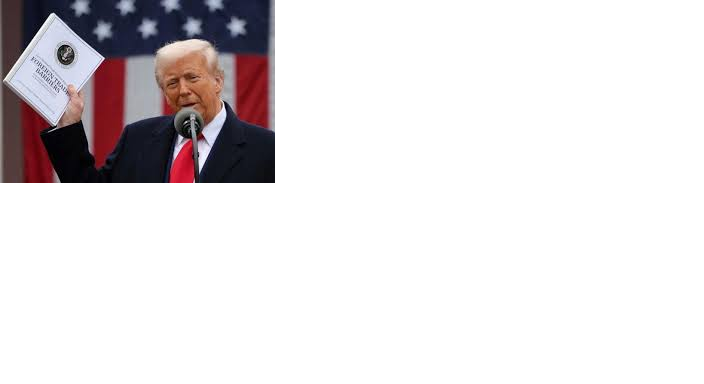
On May 7, 2026, the U.S. Court of International Trade (CIT) declared President Donald Trump’s 10% temporary global tariff “unauthorized by law.” This ruling follows a pattern of judicial pushback against the administration’s “Trade as a Weapon” policy, which previously saw the Supreme Court strike down tariffs under the International Emergency Economic Powers Act (IEEPA).
The Legal Conflict: Section 122 vs. Executive Overreach
The core of the legal dispute lies in the interpretation of the Trade Act of 1974.
- The Government’s Stance: The administration invoked Section 122 of the Act, which allows the President to impose temporary tariffs (up to 15% for 150 days) to address “large and serious” balance-of-payments (BoP) deficits.
- The Court’s Ruling: A 2-1 majority held that the President conflated a “Trade Deficit” with a “Balance-of-Payments Deficit.”
- Legal Nuance: The court noted that while the U.S. has a massive trade deficit in goods, a BoP deficit is a broader economic measure. Under the 1974 definition, a trade gap alone does not constitute a “fundamental international payments problem.”
- Constitutional Boundary: The court reaffirmed that the power to tax—including import duties—belongs primarily to Congress under Article I of the U.S. Constitution.
Specific Impact on India
- Enhanced Negotiation Leverage: The ruling comes at a critical time as India negotiates the India-U.S. Bilateral Trade Agreement. With the legal basis for “punitive” surcharges weakened, India can push for a more stable trade regime and the restoration of GSP (Generalized System of Preferences) benefits.
- Strategic Export Advantage: Indian exporters in price-sensitive sectors—such as textiles, engineering goods, and pharmaceuticals—who were bracing for a 10% hike, now have a legal window to challenge any such unilateral implementation.
- Policy Predictability: The ruling discourages “policy by tweet” or sudden executive shifts, providing Indian businesses with a more predictable environment for long-term export contracts with U.S. partners.
Impact on Global Exporters & International Trade
- Limited Immediate Financial Relief: It is crucial to note that the CIT granted “injunctive relief” only to the specific companies that filed the lawsuit. Therefore, the majority of global exporters will not see immediate refunds of duties already paid.
- Precedent against Unilateralism: This sets a global legal precedent that discourages the use of domestic laws (like Section 122) to bypass multilateral trade norms (WTO). It encourages firms in other countries to seek judicial review against “unauthorized” trade barriers.
- Persistence of the Status Quo: Since the U.S. administration has appealed the decision, the 10% tariff may remain in force during the litigation process. Global supply chains will continue to face “tariff fatigue” until a final Supreme Court ruling is delivered.
- Defining “Economic Emergency”: The ruling clarifies that a Trade Deficit (import-export gap) does not automatically constitute a Balance of Payments (BoP) Crisis. This prevents the executive from using broad economic indicators as a pretext for emergency protectionism.
Key Terms for Quick Revision
| Term | Definition in Context |
| Section 122 (Trade Act 1974) | Allows temporary import surcharges to deal with BoP crises. |
| Trade Deficit | When a country’s imports exceed its exports. |
| Balance of Payments (BoP) | A statement of all transactions made between entities in one country and the rest of the world. |
| CIT (Court of Int. Trade) | A specialized U.S. federal court with jurisdiction over civil actions arising out of import transactions and federal customs laws. |
Practice Questions
Prelims (PT) Related
Q1. With reference to the ‘Balance of Payments’ (BoP), consider the following statements:
- A ‘Trade Deficit’ in goods is always equivalent to a ‘Balance of Payments’ deficit.
- The Current Account and Capital Account are the two primary components of the BoP.
- A country can have a trade deficit while maintaining a BoP surplus.
Which of the statements given above are correct?
(a) 1 and 2 only
(b) 2 and 3 only
(c) 1 and 3 only
(d) 1, 2, and 3
Q2. Which of the following best describes ‘Section 122’ of the U.S. Trade Act of 1974 recently in the news?
(a) A provision allowing for permanent tariffs on intellectual property theft.
(b) A mechanism for the President to provide subsidies to domestic manufacturers.
(c) A legal authority to impose temporary tariffs to address fundamental international payments problems.
(d) An environmental regulation limiting the import of high-carbon goods.
Mains Related
Q1. “The use of unilateral tariffs as a tool of foreign policy creates a conflict between executive discretion and legislative authority.” In light of the recent CIT ruling, analyze the impact of such trade barriers on global supply chains and India’s export interests. (250 words)
Q2. Differentiate between a ‘Trade Deficit’ and a ‘Balance of Payments Deficit.’ Why did the U.S. Court of International Trade rule that the former does not automatically justify the invocation of emergency tariff powers under Section 122? (150 words)