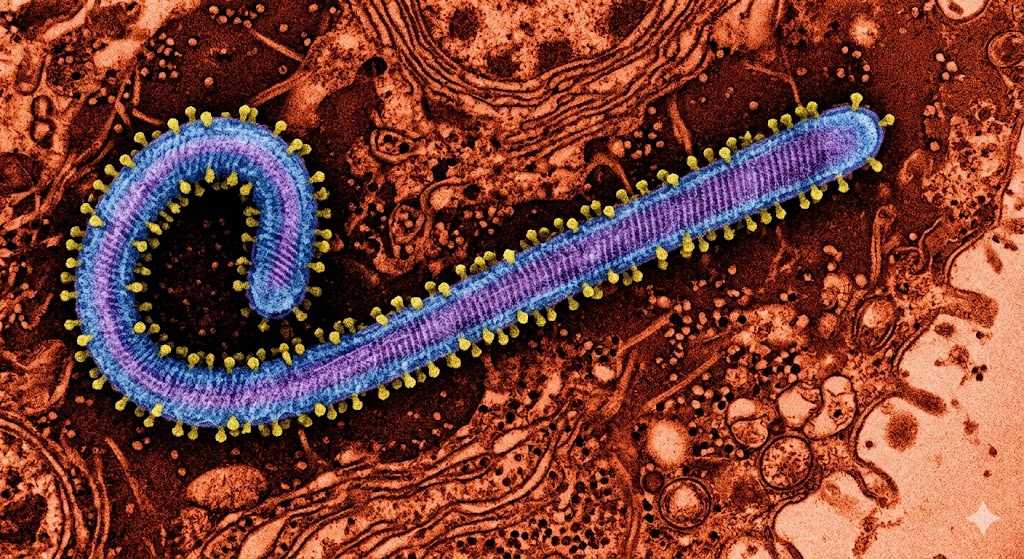
The Director-General of the World Health Organization (WHO) has declared the Ebola disease outbreak in the Democratic Republic of the Congo (DRC) and neighboring Uganda a Public Health Emergency of International Concern (PHEIC).
The declaration was triggered after a sharp spike involving over 300 suspected cases and 88 deaths, raising severe concerns over local and regional cross-border transmission.
Key Highlights of the Outbreak
- The Pathogen Strain: The current outbreak is caused by the Bundibugyo virus, a rare variant of the Ebola disease. This is only the third time this specific strain has been reported globally (previously seen in 2007 and 2012).
- The Critical Challenge: Unlike the more common Zaire Ebola strain, there are currently no approved vaccines or therapeutics specifically designed for the Bundibugyo variant. The existing Ervebo vaccine used in prior outbreaks is ineffective against this strain.
- Geographical Spread: The outbreak originated in the remote, high-traffic mining zones of Ituri Province (eastern DRC) and has rapidly migrated across health zones into capital cities, including Kampala (Uganda).
- Not a Pandemic Emergency: The WHO clarified that while it constitutes a PHEIC, it does not meet the criteria of a pandemic emergency (like COVID-19) because Ebola is significantly less transmissible. The WHO has explicitly advised against international border closures.
Understanding Ebola Virus Disease (EVD)
Nature and Origin
Ebola is a severe, often fatal zoonotic disease (animal-to-human) in humans, with an average case fatality rate of around 50% (ranging from 25% to 90% depending on the strain and quality of supportive care).
Transmission Mechanics
- Zoonotic Spillover: Transmitted to humans through close contact with the blood, secretions, or bodily fluids of infected wild animals, such as fruit bats (the natural reservoir), chimpanzees, gorillas, or monkeys.
- Human-to-Human Spread: Occurs exclusively through direct contact (via broken skin or mucous membranes) with the blood, vomit, sweat, feces, or semen of an infected person, or through surfaces contaminated with these fluids (e.g., bedding, clothing).
- What it is NOT: It is not an airborne disease and cannot be transmitted through casual contact, respiratory droplets, water, or mosquito bites.
Strains Affecting Humans
The disease is caused by viruses in the genus Orthoebolavirus. Four distinct species are known to cause disease in humans:
- Zaire virus (Most common; responsible for major historical West African outbreaks)
- Sudan virus
- Bundibugyo virus (The current variant)
- Taï Forest virus
What is a Public Health Emergency of International Concern (PHEIC)?
Defined under the International Health Regulations (IHR, 2005), a PHEIC is an extraordinary event that is determined to:
- Constitute a public health risk to other states through the international spread of disease.
- Potentially require a coordinated international response.
Note: A PHEIC is the WHO’s highest level of alarm short of a full pandemic declaration. It is designed to legally mobilize international funding, expedite diagnostic deployments, and synchronize cross-border surveillance.
Complicating Factors in Containment
- Active Conflict Zones: The Ituri province faces severe insecurity and humanitarian crises due to armed rebel groups. Attacks on healthcare facilities make contact tracing and isolation measures highly volatile.
- Delayed Detection: The outbreak circulated undetected for weeks before global health authorities were alerted, allowing it to entrench itself within informal urban healthcare networks.
Why Public Health Emergency of International Concern declaration is concerning?
1. High-Stakes Biological and Epidemic Risk
A PHEIC is not declared lightly. To qualify, an independent committee must verify that the health event is:
- Serious and Extraordinary: The situation is sudden, unusual, or unexpected (such as a rare, non-vaccinable strain like the Bundibugyo Ebola variant).
- Cross-Border Threat: The pathogen carries a documented, significant risk of spreading beyond national borders, threatening global health security.
2. The Economic and Trade Paradox (The “Punishment” Effect)
While a PHEIC is designed to mobilize international medical aid and financial resources, it historically triggers severe collateral damage:
- Unilateral Trade and Travel Restraints: Even though the WHO explicitly advises against shutting borders or halting trade (as it paralyzes local supply chains), panic often drives countries to unilaterally impose travel bans, freeze flights, and suspend imports from the affected region.
- Economic Isolation: The affected nations face massive economic shocks as tourism, foreign investment, and trade collapse. This dynamic creates a dangerous paradox: developing nations sometimes hesitate to report outbreaks early out of fear of the severe economic “punishment” a PHEIC declaration brings.
3. A Signal of Deep Systemic Vulnerability
A PHEIC declaration often shines a spotlight on underlying humanitarian and structural failures in the epicenter:
- Healthcare Gaps: It indicates that local health infrastructure is overwhelmed, often marked by high positivity rates, clusters of unexplained deaths, and infections leaking into healthcare workers.
- The Conflict Vector: It frequently flags regions where conflict and political instability prevent standard containment. For instance, in active conflict zones, executing basic public health measures like contact tracing or maintaining isolation centers is highly volatile and dangerous.
4. Global Panic and “Infodemics”
The formal declaration acts as a massive global media trigger, shifting public perception from localized concern to active anxiety:
- Stigmatization: Citizens, diaspora, or travelers arriving from the affected nations often face immediate social profiling, isolation, and discrimination worldwide.
- The Rise of Misinformation: The gap between complex scientific data and public fear is quickly filled by “infodemics”—surges of inaccurate information and conspiracy theories that disrupt official public health communication and erode trust in medical interventions.
Way Forward
1. Reforming Global Health Governance & The International Health Regulations (IHR)
- Tiered Alert System: The current PHEIC system is binary (either an emergency is declared or it is not), which can trigger disproportionate global panic. Implementing a graduated/tiered alert system (e.g., Yellow, Orange, Red alerts) would allow for measured global responses proportional to the actual threat level.
- Enforceable Compliance on Trade/Travel: The WHO’s recommendations against trade and travel barriers are currently non-binding. Strengthening the IHR (2005) mechanism to hold nations accountable for imposing unscientific, unilateral border closures is critical to prevent the economic isolation of epicenter nations.
2. Financial De-risking: Incentivizing Transparency
- Outbreak Indemnity Funds: To counter the “punishment effect” (where countries delay reporting outbreaks due to fear of economic collapse), the international community should institutionalize an automatic financial cushion or pandemic insurance fund. Nations that report outbreaks early and transparently should receive immediate economic compensation to offset losses in tourism and trade.
- Pre-allocated Emergency Financing: Streamlining international contingency funds (like the WHO Contingency Fund for Emergencies – CFE) to ensure that capital is deployed to local health authorities within 24 hours of a PHEIC declaration, cutting through bureaucratic red tape.
3. Decentralizing Health Security: Empowering Regional Bodies
- Strengthening Regional CDCs: Global interventions often face logistical and trust barriers. Elevating the role of regional architectures—such as the Africa CDC or PAHO—enables a localized, culturally nuanced response. These bodies are better equipped to navigate geopolitical sensitivities and active conflict zones (e.g., eastern DRC).
- Cross-Border Health Corridors: Instead of sealing borders entirely, neighboring countries should establish monitored health corridors with standardized screening, rapid diagnostic testing, and joint epidemiological surveillance networks to maintain economic continuity while tracking the pathogen.
4. Proactive R&D Equity and “Pan-Pathogen” Ready Platforms
- End-to-End Vaccine Equity: Global scientific alliances (like the Coalition for Epidemic Preparedness Innovations – CEPI) must prioritize R&D for neglected, rare variants of high-consequence pathogens (such as the Bundibugyo or Sudan strains of Ebola) before they turn into emergencies.
- Technology Transfer: Establishing localized manufacturing hubs for diagnostics, therapeutics, and personal protective equipment (PPE) in the Global South ensures that frontline nations do not rely exclusively on delayed international supply chains during a crisis.
5. Institutionalizing “Infodemic” Management
- Countering Misinformation Dynamically: Public health agencies must deploy active social listening tools to identify and debunk medical misinformation in real-time. Partnering with community elders, local leaders, and regional language media is essential to build public trust in medical interventions.
- Stigma Mitigation: Global communication strategies must frame the outbreak as a shared scientific challenge rather than a geopolitical threat, actively protecting diaspora populations and travelers from social profiling and discrimination.
PRELIMS (PT) PRACTICE QUESTION
Q. Consider the following statements regarding the Ebola Virus Disease (EVD):
- It is a highly contagious airborne disease that primarily spreads through respiratory droplets in crowded environments.
- The Bundibugyo virus is a rare strain of Ebola for which there are currently no globally approved targeted vaccines or therapeutics.
- A Public Health Emergency of International Concern (PHEIC) declaration by the WHO automatically legally binds all member nations to seal international borders with the epicentre.
Which of the statements given above is/are correct?
(a) 1 and 2 only
(b) 2 only
(c) 2 and 3 only
(d) 1, 2 and 3
Answer: (b) 2 only
MAINS PRACTICE QUESTION
Q. “The declaration of a Public Health Emergency of International Concern (PHEIC) underscores the compounding vulnerabilities faced by global health mechanisms when tackling non-vaccinable pathogens within conflict-ridden regions.” Discuss the multi-faceted challenges in containing such health crises and suggest a viable way forward. (15 Marks, 250 Words)