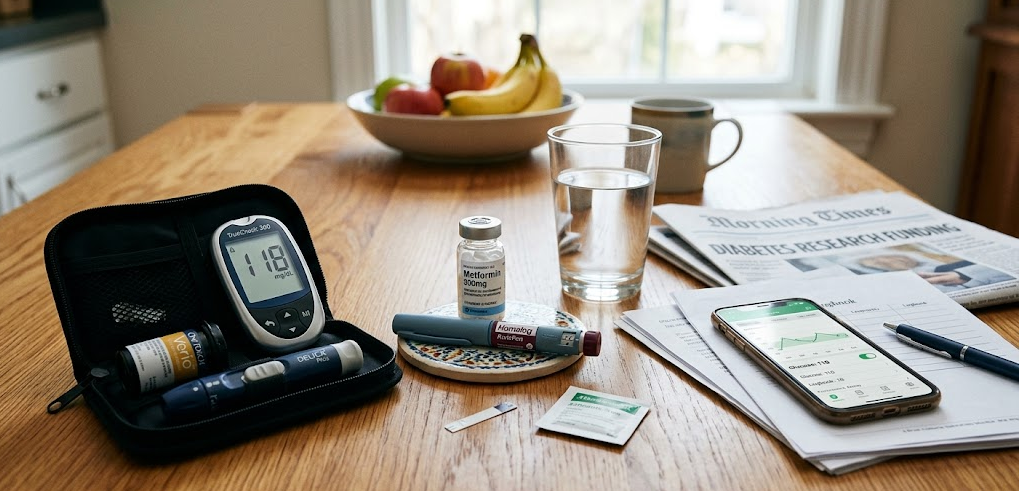
The Union Health Ministry has released the “Guidance Document on Diabetes Mellitus in Children,” establishing India’s first-ever structured national framework for the universal screening, diagnosis, and lifelong management of diabetes in children (ages 0–18).
Key Features of the National Framework
- Universal Screening: Aims to screen all children from birth to 18 years. Suspected cases will undergo immediate glucose testing and referral to district facilities.
- Free-of-Cost Care Package: Provides a comprehensive “cradle-to-adulthood” support system at public health facilities, including:
- Lifelong Insulin Therapy.
- Free monitoring devices (glucometers and test strips).
- Diagnostic services and regular follow-up.
- Integrated Continuum of Care: Creates a seamless link between community-level screening, district-level management, and tertiary care at medical colleges.
- The “4Ts” Awareness Framework: A simplified diagnostic tool for parents and teachers to recognize Type 1 diabetes symptoms early:
- Toilet: Frequent urination (polyuria).
- Thirsty: Excessive thirst (polydipsia).
- Tired: Extreme fatigue or lethargy.
- Thinner: Rapid, unexplained weight loss.
UPSC Perspective: Clinical and Policy Dimensions
1. Type 1 vs. Type 2 Diabetes
For the exam, it is critical to distinguish between the two, as childhood diabetes is predominantly Type 1.
| Feature | Type 1 Diabetes (Juvenile) | Type 2 Diabetes (Adult-onset) |
| Cause | Autoimmune; the body destroys insulin-producing cells in the pancreas. | Insulin resistance; the body doesn’t use insulin properly. |
| Insulin | Absolute deficiency; requires lifelong external insulin. | Relative deficiency or resistance; managed via diet/pills/insulin. |
| Onset | Usually sudden, typically in children or young adults. | Gradual; often linked to lifestyle/obesity. |
| Prevention | Not currently preventable. | Often preventable via healthy lifestyle. |
2. Health Governance in India
- NCD Burden: Non-communicable diseases (NCDs) now account for the majority of India’s disease burden. Historically, childhood diabetes was overlooked in the public sector, leading to high out-of-pocket expenditure (OOPE).
- Integration with NP-NCD: This framework integrates into the National Programme for Prevention and Control of Non-Communicable Diseases (NP-NCD), broadening its scope from just adults to the pediatric population.
- Universal Health Coverage (UHC): By providing free insulin and devices, India moves closer to its goal of UHC, ensuring that a “poverty-inducing” chronic condition does not bankrupt families.
Significance of the Initiative
- Reducing Mortality: Early detection prevents Diabetic Ketoacidosis (DKA), a life-threatening complication that often goes undiagnosed in children.
- Financial Protection: Lifelong management of Type 1 diabetes is expensive. Providing free strips and insulin is a major step in Social Justice and health equity.
- Human Capital: Ensuring children with diabetes live healthy, productive lives contributes to India’s future workforce and demographic dividend.
UPSC Practice Questions
Prelims (PT) Question
Q. With reference to Diabetes Mellitus, consider the following statements:
- Type 1 diabetes occurs when the pancreas produces little or no insulin due to an autoimmune response.
- The “4Ts” framework—Toilet, Thirsty, Tired, and Thinner—is a diagnostic tool used to identify early signs of Type 2 diabetes in adults.
- Under the new national framework, India provides free lifelong insulin therapy to children diagnosed with diabetes in public health facilities.
Which of the statements given above are correct?
A) 1 and 2 only
B) 1 and 3 only
C) 2 and 3 only
D) 1, 2, and 3
Answer: B) 1 and 3 only
Explanation: Statement 2 is incorrect because the 4Ts framework is specifically designed for early detection of Type 1 diabetes in children.
Mains Question
Q. “The integration of childhood diabetes care into the public health system is a significant shift in India’s health policy toward addressing the rising burden of Non-Communicable Diseases (NCDs).” Discuss the challenges and benefits of implementing a universal screening and management framework for pediatric diabetes in India. (250 words)