Traditionally, solid tumors (kidney, ovarian, pancreatic) were thought to be “patchworks.” Scientists believed some cancer cells were “antigen-negative” (lacking the target protein), allowing them to hide from T-cells and cause a relapse.
- The Reality (Pseudo-heterogeneity): The study shows these cells aren’t negative; they just have very low density of the target protein (CD70).
- The Mechanism: An enzyme called EZH2 chemically modifies the DNA to “dim the signal” of the CD70 protein, making it invisible to standard CAR-T cells.
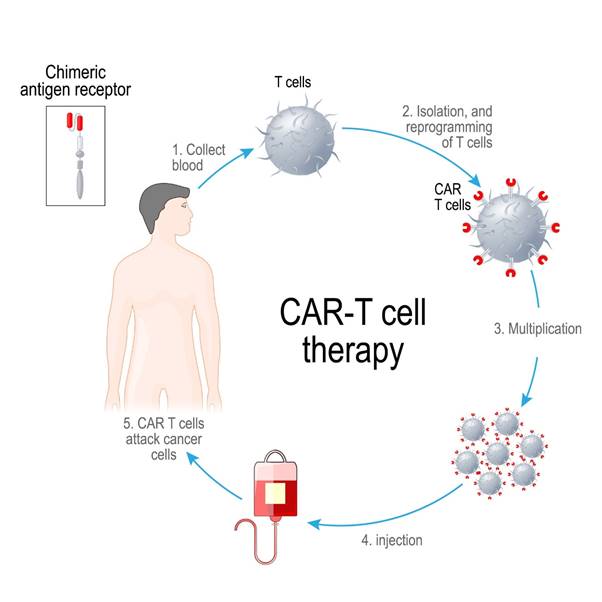
The Innovation: HIT Receptors
To solve this, researchers developed HLA-independent T-cell (HIT) receptors. This is a significant shift in synthetic biology:
| Feature | Conventional CAR-T | New HIT Receptor |
| Detection | Requires a strong signal (high protein density). | Detects faint signals (low protein density). |
| Activation | Uses a synthetic trigger system. | Plugs directly into the T-cell’s natural internal system. |
| Compatibility | Limited by “antigen heterogeneity.” | Overcomes “pseudo-heterogeneity” to kill hidden cells. |
The “Goldilocks Challenge” (Safety vs. Power)
Making T-cells hyper-sensitive creates a risk: Off-target toxicity. If the T-cell is too sensitive, it might attack healthy cells that have tiny, natural amounts of the same protein.
- Findings: The study found that CD70 is mostly absent in vital organs (heart, lungs, brain).
- Mitigation: Future clinical versions will likely include “Molecular Switches” (suicide genes) that allow doctors to remotely “turn off” the T-cells if they start attacking healthy tissue.
Impact on Cancer Treatment
- Solid Tumors: This could unlock treatments for kidney, ovarian, and pancreatic cancers, which have been notoriously resistant to immunotherapy.
- Drug-Tolerant Persisters: It targets cells that use Epigenetics (changing how genes are turned on/off) to survive chemotherapy.
- Long-term Eradication: In mice models, HIT T-cells provided “complete and lasting” eradication, preventing the cancer from growing back.
UPSC Relevant Terminology
- Antigen: A toxin or foreign substance (like a protein on a cancer cell) that induces an immune response.
- Epigenetics: The study of changes in organisms caused by modification of gene expression rather than alteration of the genetic code itself (e.g., the role of enzyme EZH2).
- Xenograft Models: A process where human tumor tissue is transplanted into another species (like mice) for research.
- HLA System: The genetic “ID tag” that helps the immune system tell the difference between its own cells and foreign ones.
Practice Questions
For Prelims (PT)
Q. In the context of the recent ‘HIT receptor’ technology, what does ‘Pseudo-heterogeneity’ in cancer cells refer to?
A) The ability of cancer cells to change their DNA sequence to avoid detection.
B) The presence of a target protein at levels too low for standard CAR-T cells to detect.
C) The migration of cancer cells from one organ to another via the bloodstream.
D) The symbiotic relationship between cancer cells and healthy immune cells.
Answer: B
For Mains
Q. “Developments in immunotherapy are shifting the focus from treating the symptoms of cancer to re-engineering the body’s own defense mechanisms.” Discuss the significance of sensitive receptor designs like HIT in overcoming the limitations of conventional CAR T-cell therapy in solid tumors. (250 words)