Subject: Environment & Biodiversity (General Studies Paper-III)
Table of Contents
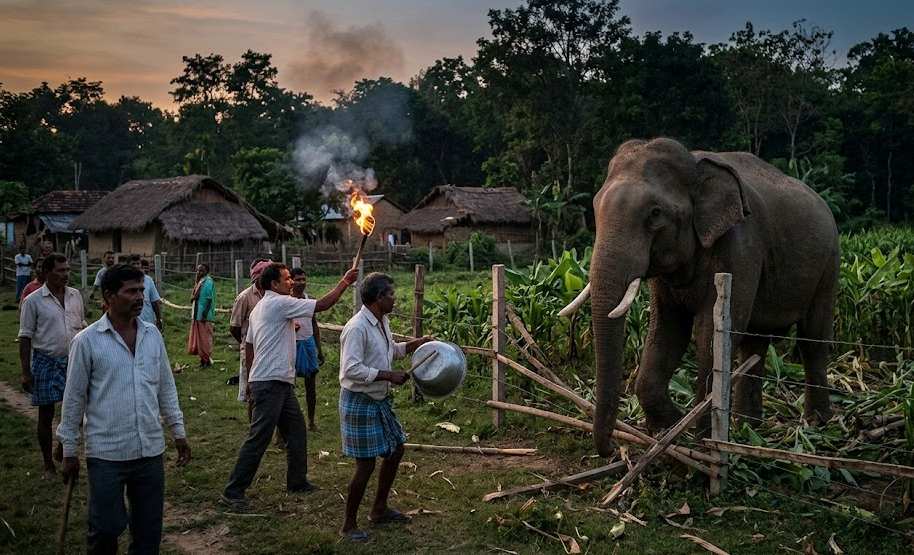
To effectively manage the rising incidents of Human-Wildlife Conflict (HWC), the Kerala Forest Department has launched an initiative to profile individual elephants that habitually stray into human settlements in north Kerala (specifically around Aralam farm, Kannur, and Kottiyoor).
Key Highlights of the Initiative
- Individual Profiling over General Tracking:
- Instead of just tracking elephant herds, the Forest Department is focusing on specific “habitual straying” elephants.
- Rapid Response Teams (RRTs), field staff, and forest watchers are actively documenting these specific animals using photographs, videos, and field reports.
- Predictable Behavioral Patterns Identified:
- Observations reveal that these problem elephants follow specific, predictable routines.
- They typically enter human settlements when human activity is at its lowest (nighttime), feed on agricultural crops, and intelligently retreat into the forest before daybreak to avoid confrontation.
Seasonal Spikes in Incursions
- Historical data collected over several years indicates a clear seasonal trend.
- Wild animal intrusions consistently peak during the early monsoon months of July and August.
- This trend and behaviour of elephants is well-documented by field staff.
- The Forest Department noted that a detailed scientific study is required to understand the exact ecological or biological reasons behind this monsoon migration into human habitats.
Significance of the Move
- Targeted Mitigation: A small percentage of elephants are often responsible for the majority of crop raids and human encounters. Profiling helps in identifying these specific ‘problem animals’ for targeted interventions, rather than disrupting the entire herd.
- Proactive Resource Deployment: By understanding seasonal peaks (July-August) and daily behavioral patterns (nocturnal raiding), the Forest Department can proactively deploy Rapid Response Teams (RRTs) and early warning systems more efficiently.
- Data-Driven Conservation: Documenting individual characteristics (like physical marks, tusk shape, or scars) creates a robust database that can aid in future translocation, radio-collaring, or scientific studies on elephant behavior.
Aralam Wildlife Sanctuary
- Location: It is the northernmost wildlife sanctuary of Kerala, located on the western slopes of the Western Ghats.
- Significance: It is contiguous with the Brahmagiri Wildlife Sanctuary of Karnataka and plays a crucial role in the movement of elephants in the region.
- The Aralam State Farm adjoins the sanctuary, making it a high-vulnerability zone for crop-raiding.
What is Human-Wildlife Conflict (HWC)?
- Human-Wildlife Conflict refers to the negative interactions between humans and wild animals, resulting in adverse impacts on both parties.
- This conflict typically occurs when the needs and behavior of wildlife geographically overlap with the goals of expanding human populations.
- The consequences include crop depredation, damage to property, loss of livestock, and in severe cases, the loss of human life and the retaliatory killing of wildlife.
- Elephants are highly intelligent, nomadic mega-herbivores with massive dietary requirements (consuming up to 150 kg of food and hundreds of liters of water daily).
Why Human-Elephant Conflict Happens
- Habitat Fragmentation and Loss: The rapid expansion of agriculture, human settlements, and linear infrastructure (railways, highways, canals, and power lines) cuts through traditional elephant habitats, shrinking their living spaces.
- Degradation of Forests: The spread of invasive weed species, forest fires, and overall degradation reduce the availability of natural fodder and water sources inside the forests, forcing elephants to venture into human-dominated landscapes to survive.
- Changing Cropping Patterns: The cultivation of highly palatable and nutritious cash crops like sugarcane, bananas, and paddy near forest fringes acts as a strong magnet for elephants, leading to frequent crop raiding.
- Disruption of Elephant Corridors: Elephants have strong spatial memories and follow traditional migratory routes over generations. When these narrow corridors are blocked by resorts, mining, or villages, elephants are forced to traverse through human settlements, making conflict inevitable.
Government Initiatives
The government has launched multiple administrative, technological, and community-level initiatives to mitigate these conflicts:
- Project Elephant (1992): A Centrally Sponsored Scheme aimed at protecting elephants, their habitats, and corridors, while also actively addressing issues of human-elephant conflict and the welfare of captive elephants.
- Technological Interventions: The implementation of Early Warning Systems (SMS alerts, radio-collaring) and AI-based surveillance. A prime example is the Gajraj System, an AI-based intrusion detection system installed on railway tracks to prevent elephant deaths from train collisions.
- Physical and Bio-Barriers: Erecting solar-powered electric fences, digging elephant-proof trenches (EPTs), and implementing innovative bio-fences, such as Project RE-HAB (Reducing Elephant-Human Attacks using Bees), which uses bee-boxes as a deterrent.
- Rapid Response Teams (RRTs): The deployment of specialized forest department teams equipped with customized vehicles, drones, and non-lethal deterrents to safely drive straying elephants back into the forests.
- Financial Compensation: Providing ex-gratia relief for the loss of human life, property damage, and crop destruction to prevent anger and retaliatory killings by affected local communities.
What Should Be Done?
To achieve long-term coexistence, mitigation strategies must shift from reactive management to proactive planning:
- Securing and Restoring Corridors: Legally notifying and physically securing the remaining elephant corridors across the country. Land acquisition or the voluntary, adequately compensated relocation of villages from critical bottlenecks must be prioritized.
- Eco-friendly Land Use Planning: Infrastructure projects in and around forest areas must strictly implement animal-friendly designs, such as animal underpasses, overpasses, and eco-bridges, to allow safe passage.
- Crop Diversification at Fringes: Encouraging and subsidizing farmers in forest fringe areas to grow crops that are unpalatable to elephants—such as ginger, turmeric, chilies, and lemon—instead of traditional cash crops.
- Streamlined Compensation Mechanisms: Delays in distributing compensation often trigger immense anger and retaliatory actions (like electrocution or poisoning). Establishing a fast, transparent, and digitized compensation mechanism is crucial for maintaining local support.
- Promoting a Co-existence Model: Shifting the narrative from “conflict mitigation” to “human-wildlife coexistence” by involving local communities in conservation efforts and eco-tourism, ensuring they benefit economically from the preservation of wildlife.
Prelims Practice Question
Question: Consider the following statements regarding elephant conservation and human-wildlife conflict in India:
- The Aralam Wildlife Sanctuary, frequently in the news for human-elephant conflict, is located in the Western Ghats of Kerala.
- Asian elephants are strictly diurnal (active only during the day) in their feeding habits, which prevents nighttime crop raiding.
- The Indian elephant is listed as an ‘Endangered’ species on the IUCN Red List.
Which of the statements given above is/are correct?
(a) 1 and 2 only
(b) 1 and 3 only
(c) 3 only
(d) 1, 2, and 3
Answer: (b) 1 and 3 only
Explanation:
- Statement 1 is correct: Aralam WLS is situated in the Western Ghats in Kerala (Kannur district).
- Statement 2 is incorrect: Elephants are known to alter their behavior based on human presence. In areas with high human-wildlife conflict, elephants often adopt nocturnal habits (active at night) for crop-raiding to avoid human encounters, as noted in the recent Kerala profiling initiative.
- Statement 3 is correct: The Asian elephant (including the Indian subspecies) is listed as Endangered on the IUCN Red List.
Mains Practice Question
Question: “Traditional methods of mitigating human-elephant conflict, such as physical barriers, have proven to be largely inadequate.” In light of the recent initiative by the Kerala Forest Department, discuss how behavioral profiling and technology can offer sustainable solutions to human-wildlife conflict in India. (150 words)