Table of Contents
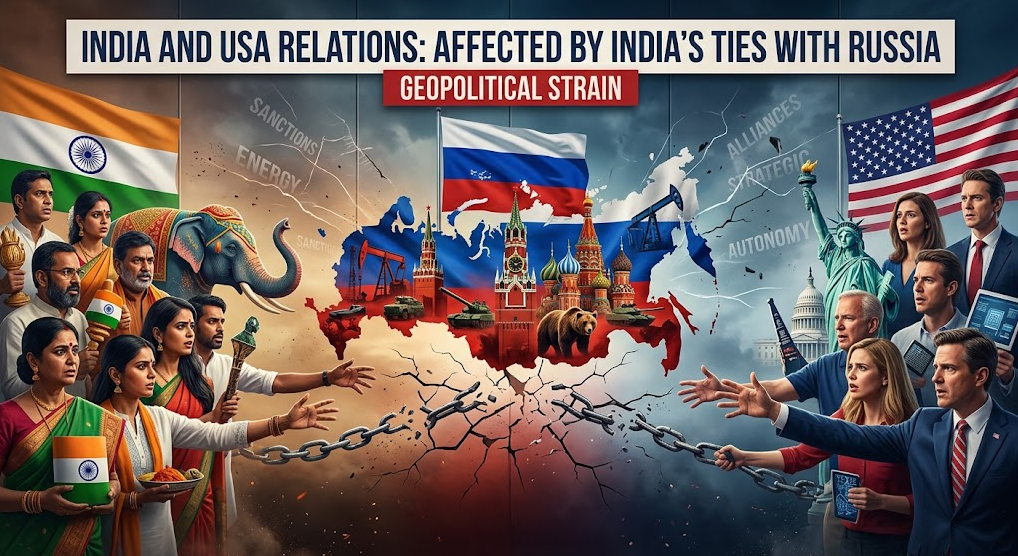
The U.S. Senate passed the Lindsey O. Graham Sanctioning Russia and Iran Act of 2026 by an 86–11 vote. The Bill is aimed at reducing Russia’s revenue from energy exports, which the U.S. argues helps finance the war in Ukraine. It must still pass the House of Representatives and become law before any tariff can be imposed.
The Bill would authorise tariffs of up to 100% on goods imported from countries that continue buying large quantities of Russian oil or gas. The measure does not automatically impose a 100% tariff; it gives the U.S. President discretion to determine whether and how to apply it.
Main Provisions
Countries targeted
Tariffs may apply to a country that:
- Was among the five largest importers of Russian crude oil or natural gas during the 12 months preceding enactment; and
- Continued importing Russian oil or gas 30 days after the Act came into force.
A second criterion targets countries that are among the top five facilitators of Russian oil sanctions evasion. India faces a greater risk under the first criterion than under the second.
Sectors covered
The Act seeks to impose sanctions on:
- Russian political leadership.
- Financial institutions.
- Energy companies and networks.
- Sanctions-evasion networks.
- Countries that purchase or facilitate the purchase of Russian energy.
Why India Is Vulnerable
- India and China are among the largest buyers of Russian crude oil.
- Russian oil accounted for over 40% of India’s crude imports in May 2026 and over 50% in June 2026, according to the passage.
- A rapid reduction in Russian imports would be difficult because:
- India’s refineries have adapted to Russian crude.
- Alternative supplies may be more expensive.
- Shipping through the Strait of Hormuz remains vulnerable.
- Replacing Russian supplies quickly could tighten global oil markets.
Likely Impact on India
Economic impact
- A 100% tariff on Indian goods entering the U.S. would significantly reduce their price competitiveness.
- Export-oriented sectors could face pressure, particularly:
- Textiles and garments
- Pharmaceuticals
- Engineering goods
- Chemicals
- Gems and jewellery
- Information-technology-enabled services, indirectly through wider trade tensions
- It could weaken India’s trade surplus or increase the trade deficit with the U.S.
- Exporters may attempt to redirect goods to Europe, West Asia, Africa and Southeast Asia.
Energy-security impact
- Abruptly reducing Russian oil purchases could raise India’s import bill.
- Dependence on alternative suppliers could expose India to:
- Higher prices
- Supply disruptions
- Greater vulnerability to geopolitical crises
- Global crude prices could rise if major buyers are forced to reduce Russian imports simultaneously.
Foreign-policy impact
- The issue may create friction in India-U.S. relations.
- It tests India’s policy of strategic autonomy.
- It may affect cooperation in:
- The Quad
- Indo-Pacific security
- Defence technology
- Trade negotiations
- India will have to balance relations with the U.S., Russia, Gulf countries and European partners.
Significance of Russian Oil for India
- Russian crude became more important for India after the Russia-Ukraine conflict and the imposition of Western sanctions.
- Discounted Russian oil has helped Indian refiners obtain supplies at relatively competitive prices.
- India has maintained that:
- It follows applicable international rules.
- Energy purchases are guided by national interest.
- Affordable and stable energy is essential for a developing economy.
- India also argues that restricting purchases by major consumers can increase global oil prices and harm developing countries.
Key Challenges for India
- Strategic dilemma: Continue buying Russian oil and risk U.S. trade penalties, or reduce imports and face higher energy costs.
- Sanctions compliance: Ensure that Indian companies do not assist sanctions evasion.
- Payment and shipping mechanisms: Manage insurance, banking and logistics without violating sanctions.
- Export vulnerability: Reduce excessive dependence on the U.S. market.
- Diplomatic balancing: Prevent the issue from damaging wider India-U.S. relations.
India’s Possible Response
- Seek a waiver or exemption through diplomatic negotiations.
- Emphasise that energy purchases are essential for India’s developmental needs.
- Gradually diversify crude suppliers rather than making an abrupt reduction.
- Strengthen domestic refining and strategic petroleum reserves.
- Expand trade with alternative markets.
- Improve export competitiveness through technology, logistics and quality standards.
- Ensure strict compliance with international sanctions and prevent circumvention.
- Use platforms such as the G20 and WTO to oppose unilateral trade coercion.
Broader Geopolitical Significance
- The Bill reflects the growing weaponisation of trade and finance in international relations.
- It represents the use of secondary sanctions, where a country penalises third countries for doing business with a sanctioned state.
- It may deepen fragmentation in the global energy market.
- It could encourage countries to:
- Diversify payment systems.
- Reduce dependence on the dollar.
- Create alternative energy and financial networks.
- It may also expose the limits of strategic autonomy when economic interdependence is high.
Important Concepts
- Secondary sanctions: Penalties imposed on third-country entities for conducting specified transactions with a sanctioned country.
- Trade coercion: Use of tariffs or market access restrictions to influence another country’s policy decisions.
- Strategic autonomy: Ability to take independent foreign-policy decisions while maintaining partnerships with multiple powers.
- Energy security: Reliable access to adequate, affordable and uninterrupted energy supplies.
- Sanctions evasion: Methods used to bypass restrictions through intermediaries, alternative shipping routes, opaque ownership or disguised transactions.
- Weaponised interdependence: Use of control over global networks—finance, technology, trade or logistics—for geopolitical pressure.
Prelims Facts
- Bill: Lindsey O. Graham Sanctioning Russia and Iran Act of 2026
- Passed by the U.S. Senate with an 86–11 vote.
- Next stage: Passage by the U.S. House of Representatives.
- Maximum proposed tariff: Up to 100%.
- Target: Major buyers of Russian oil and gas, and countries facilitating sanctions evasion.
- India is vulnerable because it is among the major importers of Russian crude oil.
- The Bill does not automatically impose a tariff; it creates the authority to impose one.
Mains Linkages
GS Paper II
- India-U.S. relations.
- Strategic autonomy.
- International sanctions.
- Global governance.
- Bilateral trade and diplomacy.
- Impact of great-power rivalry on developing countries.
GS Paper III
- Energy security.
- International trade.
- Inflation and balance of payments.
- Strategic petroleum reserves.
- Supply-chain resilience.
- Economic security.
Mains Question
Q. The proposed U.S. sanctions Bill targeting major buyers of Russian oil presents India with a dilemma between energy security and trade security. Discuss.
Answer Framework
Introduction:
The proposed U.S. legislation seeks to impose tariffs of up to 100% on countries that continue to purchase significant quantities of Russian oil or gas. India is potentially affected because Russian crude constitutes a substantial share of its imports.
Energy-security concerns:
- Russian oil provides diversified and competitively priced supplies.
- Immediate substitution could increase India’s import bill.
- Global oil prices may rise if large buyers reduce Russian imports simultaneously.
- Shipping disruptions and geopolitical instability could worsen supply risks.
Trade concerns:
- High U.S. tariffs could damage Indian exports.
- Labour-intensive sectors may lose competitiveness.
- Foreign investment and supply-chain decisions could be affected.
- India’s trade negotiations with the U.S. may become more difficult.
Foreign-policy concerns:
- The issue tests strategic autonomy.
- India must maintain ties with both the U.S. and Russia.
- Secondary sanctions raise concerns regarding national sovereignty and unilateral coercion.
- India must avoid being drawn into great-power bloc politics.
Way forward:
- Seek diplomatic exemptions.
- Diversify energy sources gradually.
- Maintain sanctions compliance.
- Expand export markets.
- Strengthen domestic energy capacity and strategic reserves.
- Use multilateral forums to promote transparent and rules-based trade.
Conclusion:
India should avoid an abrupt policy reversal that could damage energy security, while also reducing excessive dependence on any single supplier or market. A calibrated strategy combining diplomacy, diversification and compliance would best protect India’s economic and strategic interests.