Table of Contents
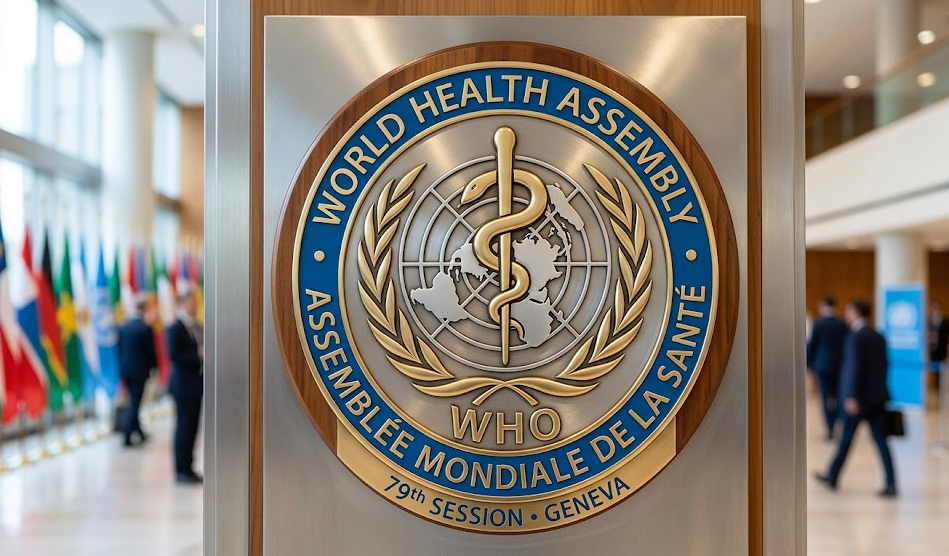
The World Health Assembly (WHA) recently passed the first-ever global resolution on strokes, establishing the condition as a critical public health priority. Submitted by Egypt and adopted by the assembly, the resolution creates a historic political mandate to combat one of the leading causes of global mortality and disability.
About the WHA Resolution on Strokes
- Core Objective: It urges member states to strengthen national policies across the entire stroke care pathway.
- Four Pillars of the Framework:
- Prevention and risk-factor control.
- Timely acute treatment.
- Expanded rehabilitation.
- Long-term support and health system readiness.
- Significance: It shifts the global perception of stroke from being solely an “acute medical emergency” to a lifelong neurological and rehabilitation challenge, reinforcing accountability and structured reporting.
What is a Stroke?
According to the World Health Organization (WHO), a stroke is a medical emergency that occurs when blood flow to the brain is interrupted. This lack of blood flow deprives brain cells of oxygen, leading to rapid cell death and serious, often permanent, complications.
There are two primary mechanisms:
- Ischemic Stroke: Caused by a blockage (clot) in an artery supplying blood to the brain.
- Hemorrhagic Stroke: Caused by bleeding when a weakened blood vessel in the brain ruptures.
Before understanding the impact of a stroke, you can explore the structures of the brain and nervous system that are directly affected when blood flow is compromised:
Key insight: Because different regions of the brain control different bodily functions, the physical and cognitive disabilities resulting from a stroke depend entirely on which specific area of the brain is damaged by the interrupted blood flow.
The Burden of Stroke
Global Scenario
- Incidence: Strokes affect approximately 12 million people annually.
- Mortality & Morbidity: They kill over half of those affected. Shockingly, two out of three survivors are left with a lasting disability, making it a leading cause of long-term impairment worldwide.
The Indian Scenario & Challenges
- High Incidence & Fatality: The crude incidence of stroke in India ranges from 108 to 172 per 1,00,000 people per year. The one-month case fatality rate is alarmingly high, hovering between 18% and 42%.
- Early Onset: Data indicates that strokes occur much earlier in India compared to Western countries. This is largely driven by the interaction between genetic predispositions and modifiable environmental factors.
- Severe Infrastructure Gap: India has only about 8,000 neurologists and neurosurgeons to serve its entire population of 1.4 billion, severely compounding the inadequacy of timely, specialized acute care.
- Economic Impact: The true cost is not just in mortality, but in the millions of man-hours lost, including the massive economic and emotional toll on family caretakers.
Risk Factors: The “Wake-Up Call”
While specific genes increase susceptibility, the risk of stroke—especially in younger demographics—is heavily driven by modifiable risk factors. These include:
- Hypertension and Diabetes
- Tobacco use and Alcohol misuse
- Obesity, physical inactivity, and unhealthy diets
- Air pollution
Experts suggest that India’s robust telecom network and improving digital literacy present an excellent opportunity to scale up preventive healthcare, showing the world that stroke prevention is highly achievable.
Way Forward
- Strengthening the ‘Golden Hour’ Response: The effectiveness of acute stroke treatment (like thrombolysis) drops drastically after the first 4.5 hours. India needs to establish a robust Hub-and-Spoke model, where primary and district health centers (spokes) are connected to tertiary hospitals (hubs) for rapid assessment and treatment.
- Scaling Up Tele-Neurology: Given the severe shortage of neuro-specialists (only ~8,000 nationwide), leveraging India’s vast telecom network is critical. Tele-stroke programs can empower general physicians in rural areas to administer clot-busting drugs under the remote guidance of city-based neurologists.
- Capacity Building of Frontline Workers: ASHA workers, ANMs, and paramedics should be extensively trained to recognize the early signs of a stroke using globally recognized protocols like FAST (Face drooping, Arm weakness, Speech difficulty, Time to call).
- Aggressive Primary Prevention: The rising incidence of stroke in young Indians must be tackled through the strict implementation of the National Programme for Prevention and Control of Non-Communicable Diseases (NP-NCD). This includes population-level screening for hypertension and diabetes, alongside aggressive public campaigns against tobacco, alcohol, and air pollution.
- Community-Based Neurorehabilitation: Stroke is a lifelong neurological challenge. To reduce the massive economic toll and loss of man-hours, rehabilitation must be decentralized. Establishing affordable, community-based physiotherapy and neurorehabilitation centers at the Panchayat or block level will ensure survivors achieve maximum functional recovery without crippling out-of-pocket expenditure.
- Mandatory Stroke Registries: To formulate data-driven policies, India must implement a comprehensive national stroke registry to track incidence, mortality, and post-stroke disability across different demographic and geographic zones.
UPSC Practice Questions
Prelims (PT) Question
Q. With reference to the recently passed World Health Assembly (WHA) resolution on strokes, consider the following statements:
- This is the first-ever WHA resolution dedicated specifically to strokes, establishing it as a global public health priority.
- A stroke occurs exclusively due to the rupture of a weakened blood vessel in the brain.
- In India, the crude incidence of stroke is characterized by an exceptionally early onset in the population compared to global averages.
Which of the statements given above is/are correct?
(a) 1 only
(b) 1 and 3 only
(c) 2 and 3 only
(d) 1, 2, and 3
Answer: (b) 1 and 3 only
Explanation: Statement 2 is incorrect. According to the WHO definition, a stroke occurs when blood flow to the brain is interrupted either due to a blockage (ischemic) or bleeding (hemorrhagic). Statements 1 and 3 are correct based on the passage.
Mains Question
Q. “The recent World Health Assembly resolution recognizes stroke not merely as an acute medical emergency, but as a lifelong neurological and rehabilitation challenge.”
In light of this statement, analyze the burden of stroke in India. Discuss the institutional and infrastructural bottlenecks in stroke management and suggest measures to strengthen the care pathway. (250 words)
Hints for Mains Answer:
- Introduction: Mention the historic WHA resolution proposed by Egypt. Briefly define stroke and its global burden (12 million affected annually; 2/3rd survivors face disability).
- Burden in India: Highlight the high crude incidence (108-172 per lakh), the 18-42% fatality rate, and the concerning trend of early onset in the younger population due to lifestyle and environmental factors. Emphasize the massive loss of productive man-hours.
- Institutional/Infrastructural Bottlenecks:
- Severe shortage of specialists (only ~8,000 neurologists/neurosurgeons for the whole country).
- Lack of acute care infrastructure (Stroke Units) in rural and tier-2/3 areas.
- Absence of scalable neurorehabilitation models for long-term care.
- Measures/Way Forward:
- Primary Prevention: Aggressive campaigns targeting modifiable risks (hypertension, tobacco, pollution).
- Digital Health Intervention: Leveraging India’s strong telecom network for tele-neurology and remote diagnostics.
- Capacity Building: Training general physicians and frontline workers (ASHA/ANM) in early stroke detection (“Time is Brain”).
- Rehabilitation: Investing in community-based, long-term neurorehabilitation centers as envisioned by the WHA framework.