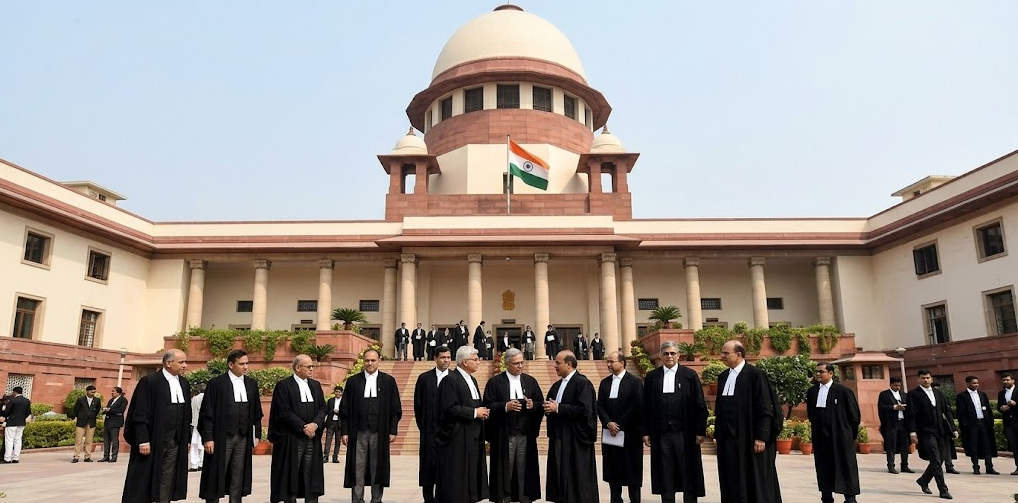
Recently, the Union Cabinet approved an increase in the number of judges in the Supreme Court from 34 (including the Chief Justice of India) to 38. This move marks the first increase in judicial strength since 2019.
Constitutional and Legal Framework
- Article 124(1): The Constitution of India vests the power to increase the number of Supreme Court judges solely in Parliament. It originally provided for a Chief Justice and seven other judges, leaving it to Parliament to prescribe a larger number by law.
- The Supreme Court (Number of Judges) Act, 1956: This is the specific legislation that Parliament amends whenever the sanctioned strength needs to be revised.
- Last Amendment (2019): Raised the strength from 31 to 34 (including the CJI).
- Proposed Amendment (2026): A Bill will be introduced in the next session to raise the strength by four additional judges.
Need for the Increase: The Crisis of Pendency
The primary driver for this expansion is the mounting backlog of cases, which has reached a critical threshold:
- Current Backlog: Approximately 92,385 cases are pending in the Supreme Court.
- The Pandemic Effect: While the introduction of e-filing increased accessibility, it also significantly accelerated the inflow of new cases, outpacing the disposal rate.
- Constitutional Mandate: The Supreme Court is increasingly burdened with “Special Leave Petitions” (SLPs) and routine appeals, leaving less time for a larger “Constitution Bench” to decide on matters of significant constitutional interpretation.
Current Vacancies and Retires (2026)
The expansion comes at a time when the court is navigating a period of transition:
- Current Vacancies: Two seats are currently vacant (following the retirements of Justice B.R. Gavai and Justice Rajesh Bindal).
- Upcoming Retirements: Three more judges (Justices J.K. Maheshwari, Pankaj Mithal, and Sanjay Karol) are scheduled to retire by August 2026.
- The Collegium System: Once the 1956 Act is amended, the Supreme Court Collegium will recommend names to fill both existing vacancies and the four newly created posts.
Evolution of Supreme Court Strength
| Year | Total Sanctioned Strength (Including CJI) |
| 1950 | 8 |
| 1986 | 26 |
| 2009 | 31 |
| 2019 | 34 |
| 2026 (Proposed) | 38 |
Way Forward
- Beyond Numbers: While increasing the number of judges is a necessary step, legal experts suggest that judicial reforms must also include the streamlining of SLPs and the potential creation of a National Court of Appeal to handle routine appeals.
- Infrastructure Augmentation: Expanding judicial strength requires a proportional increase in physical and digital infrastructure (courtrooms, staff, and tech support).
- Timely Appointments: The benefit of increased strength can only be realized if the Collegium and the Government work in tandem to ensure vacancies are filled without prolonged delays.
PRELIMS PRACTICE QUESTIONS (PT)
Q1. Consider the following statements regarding the Supreme Court of India:
- The Constitution of India gives the President the power to increase the number of judges in the Supreme Court by an executive order.
- The current sanctioned strength of the Supreme Court is 34, including the Chief Justice of India.
- Every judge of the Supreme Court is appointed by the President after consultation with the Collegium.
Which of the statements given above is/are correct? A) 1 and 2 only
B) 2 and 3 only
C) 1 and 3 only
D) 1, 2, and 3
Ans 1: B (2 and 3 only)
- Statement 1 is incorrect: Under Article 124(1), Parliament has the sole authority to increase the number of judges by law, not the President.
- Statement 2 is correct: The 2019 amendment set the strength at 34 (33 + CJI).
- Statement 3 is correct: Appointments are made by the President, following the recommendation of the Collegium.
MAINS PRACTICE QUESTION
“The increase in the sanctioned strength of the Supreme Court is a necessary but insufficient step toward addressing the mounting crisis of judicial pendency in India.” Critically analyze the statement in light of recent developments. (250 words)