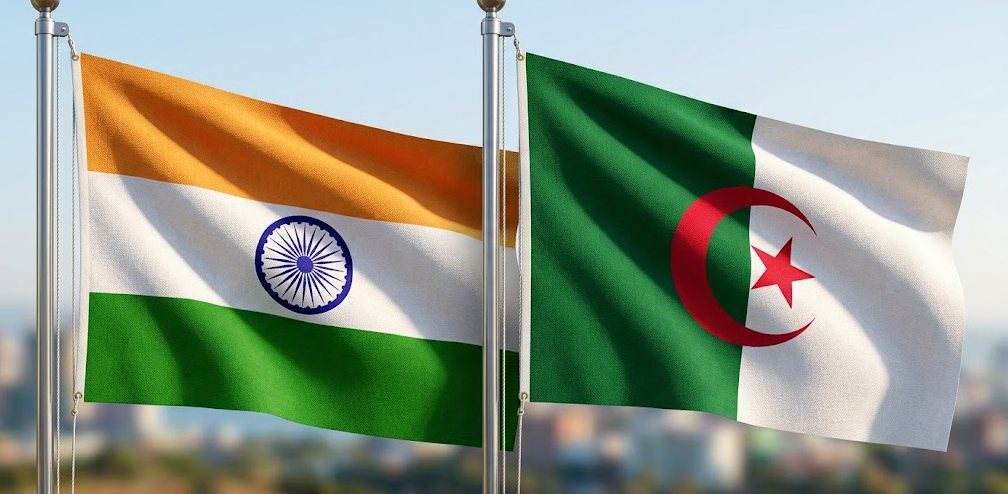
India and Algeria held their inaugural Joint Commission meeting on defense in New Delhi recently. This marks a strategic shift in bilateral relations, moving beyond traditional trade and energy toward a formal and structured defense partnership.
2. Key Highlights of the Meeting
The discussions were co-chaired by India’s Joint Secretary (International Cooperation) and Algeria’s Chief of Staff of the Naval Forces. The primary outcomes include:
- Formalization of Framework: Both nations signed the Rules of Procedure (RoP). This document will act as the administrative backbone to oversee and implement future defense cooperation initiatives.
- Focus Areas: The talks centered on four critical pillars:
- Training: Capacity building and exchange of personnel.
- Joint Military Exercises: Planning for future interoperability between the armed forces.
- Medical Collaboration: Sharing expertise in military medicine and field hospitals.
- Defense Industry Engagement: Exploring opportunities for co-development and export of defense equipment under the ‘Make in India’ initiative.
3. Strategic Significance of India-Algeria Relations
A. North African Gateway
Algeria is a dominant power in North Africa and the Maghreb region. Strengthening ties with Algeria allows India to expand its footprint in the Mediterranean and the Sahara-Sahel region, which is critical for counter-terrorism and maritime security.
B. Defense Diplomacy and Indigenization
As India seeks to become a global defense manufacturing hub, Algeria—traditionally a large importer of defense hardware—presents a significant market for Indian-made platforms (such as Tejas, BrahMos, or armored vehicles).
C. Energy Security
Algeria is one of the world’s leading producers of natural gas and oil. A stable defense and strategic relationship helps secure India’s energy interests in the African continent.
D. South-South Cooperation
Both nations share a history of Non-Alignment (NAM). This meeting reinforces “South-South Cooperation,” where developing nations collaborate to reduce dependency on traditional Western or Northern power blocs.
Challenges in the India-Algeria Relationship
Despite the historical warmth rooted in the Non-Aligned Movement (NAM), several contemporary hurdles persist:
1. Trade Concentration & Imbalance
- Hydrocarbon Dependency: Over 90% of India’s imports from Algeria are crude oil, LNG, and petroleum products. This “commodity-heavy” trade makes the relationship vulnerable to global energy price fluctuations.
- Modest Volume: Bilateral trade hovers around USD 1.7 billion (2025-26). Compared to India’s trade with other African giants like Nigeria or South Africa, this is significantly below potential.
2. Geopolitical Competition
- Traditional Allies: Algeria has deep-rooted defense and strategic ties with Russia and growing economic linkages with China (under the Belt and Road Initiative). India faces stiff competition in penetrating the Algerian defense and infrastructure markets.
- The “Morocco Factor”: India maintains a delicate balancing act between Algeria and Morocco. The rivalry over the Western Sahara issue remains a diplomatic tightrope; Algeria supports the Polisario Front, while Morocco claims sovereignty.
3. Logistics and Connectivity
- Geographic Distance: Lack of direct shipping lines and limited air connectivity increases the cost of doing business.
- Language Barrier: The predominance of French and Arabic in Algerian bureaucracy and business can sometimes be a hurdle for Indian SMEs compared to Anglophone African nations.
4. Strategic “Vacuum” in the Past
- Until the 2024 Defence MoU and the 2026 Joint Commission, the relationship lacked a “structured institutional framework,” often relying on sporadic high-level visits rather than consistent bureaucratic engagement.
The “Way Forward”: Strategic Solutions
To transform this “resource-based” tie into a “strategic partnership,” the following solutions are being institutionalized:
1. Economic Diversification (The “Pharma-Fertilizer” Link)
- Food Security: Algeria is rich in Rock Phosphate. India should enter into long-term joint ventures for fertilizer production, directly linking Algerian minerals to Indian agricultural productivity.
- Pharmaceutical Hub: Indian pharma companies (already leaders in generic medicine) can use Algeria as a manufacturing base to access the broader African Continental Free Trade Area (AfCFTA).
2. Defense Indigenization & Export
- Make in India for Algeria: Instead of just selling equipment, India should focus on co-development. The 2026 signing of the Rules of Procedure for defense is a step toward offering Indian platforms (LCA Tejas, Akash Missiles) as reliable alternatives to traditional suppliers.
3. Digital & Space Cooperation
- The “Digital India” Export: Algeria is keen on modernizing its banking and governance. Exporting the UPI/Stack model and collaborating in satellite launching (ISRO) can provide a non-security, high-impact pillar to the relationship.
4. Strategic Autonomy Synergy
- Both nations prioritize Strategic Autonomy. India should position itself as a partner that offers “technology without strings,” unlike the debt-trap risks or political conditionalities often associated with other global powers.
5. Enhancing Connectivity
- Utilizing Algerian ports like Algiers and Oran as gateways for Indian goods into the Mediterranean and European markets.
Conclusion
The inaugural Joint Commission meeting is a milestone in India’s “Africa Outreach.” By moving into the defense sector, India is signaling that it views Algeria not just as a trading partner, but as a strategic ally in the African continent’s security architecture.
UPSC Practice Questions
Preliminary Examination
Q1. Which of the following bodies of water borders Algeria?
(a) Red Sea
(b) Mediterranean Sea
(c) Caspian Sea
(d) Persian Gulf
Answer: (b) Mediterranean Sea
Mains Examination
Q2. “Defense diplomacy has emerged as a crucial pillar of India’s ‘Africa Outreach’ strategy.” In this context, discuss the significance of the inaugural India-Algeria Joint Commission meeting. (10 Marks, 150 Words)
Model Structure:
- Introduction: Mention the recent Joint Commission meeting and its focus on defense.
- Body:
- Highlight the shift from energy-centric ties to security-centric ties.
- Discuss the role of the ‘Make in India’ defense industry in African markets.
- Mention the importance of Algeria in the Mediterranean and North African security.
- Conclusion: Summarize how such bilateral frameworks help India counter other regional influences and promote its image as a net security provider.