Table of Contents
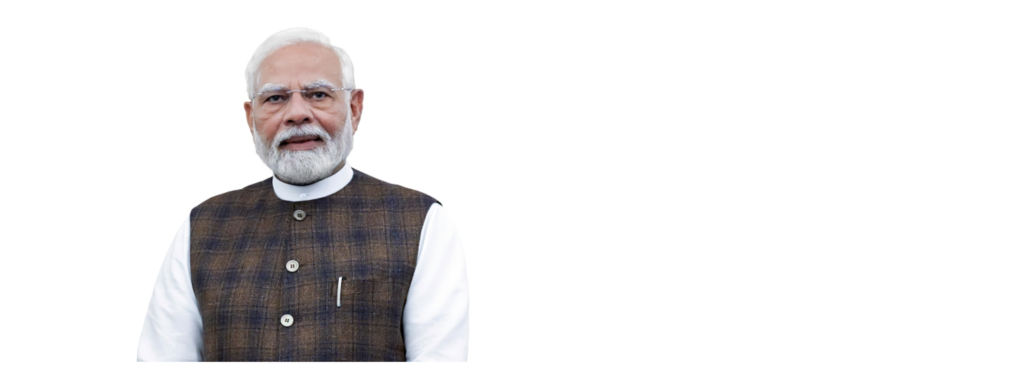
A significant milestone in India’s post-independence political history is being marked, with Prime Minister Narendra Modi becoming the longest continuously serving elected Prime Minister of the country.
Key Facts and Historical Perspective
- The 4,399-Day Milestone: On June 10 (2026), Prime Minister Narendra Modi completes 4,399 days in office continuously, completing 12 uninterrupted years as the head of the National Democratic Alliance (NDA) government.
- Surpassing First Prime Minister’s Record: This milestone surpasses the continuous elected tenure of India’s first Prime Minister, Jawaharlal Nehru.
- Contextualizing Nehru’s Tenure: While Nehru served as Prime Minister from 1947 until his death in 1964 (a total of nearly 17 years), his first stint from 1947 to 1952 was as the head of an interim government, as general elections had not yet been institutionalized. His strictly elected continuous tenure began in 1952.
- Contextualizing Indira Gandhi’s Tenure: Former Prime Minister Indira Gandhi served for a longer total duration (approximately 15 years), but her tenure was “fractured” or divided into multiple non-continuous terms (1966–1977 and 1980–1984).
Significance
- Epoch of Transformation: Political analysts view this milestone not just as a numerical feat, but as a marker of a profound shift in Indian politics. It represents a period where many traditional “givens” or established norms of Indian power politics were challenged and reshaped.
- Electoral Dominance: Sustaining a continuous run as the head of a democratic government for over a decade underscores an era of stable, single-party dominance at the center, a shift from the highly fractured coalition politics of the 1990s and 2000s.
- Historical Contextualization: Comparisons between Prime Ministers from different eras are often subjective because each leader is a product of specific historical, economic, and geopolitical contexts. However, continuous long-term leadership provides the stability required for implementing long-term, transformative structural policies.
Constitutional Provisions Related to the Post of PM
The Indian Constitution provides the framework for a parliamentary form of government where the Prime Minister (PM) is the de facto executive authority (head of the government), while the President is the de jure executive authority (head of the state).
- Article 74(1): States that there shall be a Council of Ministers with the Prime Minister at the head to aid and advise the President. The 42nd and 44th Amendment Acts made this advice binding on the President.
- Article 75(1): The Prime Minister shall be appointed by the President, and the other Ministers shall be appointed by the President on the advice of the Prime Minister.
- Note: The President cannot exercise arbitrary discretion; by convention, the leader of the majority party or coalition in the Lok Sabha is appointed.
- Article 75(2): The Ministers hold office during the pleasure of the President. (However, the PM can only be dismissed if they lose the confidence of the Lok Sabha).
- Article 75(3): The Council of Ministers shall be collectively responsible to the House of the People (Lok Sabha).
- Article 78: Outlines the duties of the PM regarding the furnishing of information to the President. It is the PM’s constitutional duty to communicate all decisions of the Council of Ministers relating to the administration of the Union and proposals for legislation to the President.
Functions of the Prime Minister
The Prime Minister occupies a central and powerful position in the Indian constitutional scheme, often described as the “linchpin of the government.”
- Head of the Council of Ministers: The PM has a free hand in recommending ministers for appointment, allocating portfolios, reshuffling the cabinet, and asking a minister to resign. The PM chairs Cabinet meetings and coordinates the activities of all ministries. The resignation or death of the PM automatically dissolves the entire Council of Ministers.
- Principal Channel of Communication: The PM acts as the sole link between the President and the Cabinet (under Article 78).
- Leader of the Parliament: As the leader of the majority party in the lower house, the PM advises the President on summoning and proroguing parliamentary sessions, announces major government policies on the floor of the House, and can recommend the dissolution of the Lok Sabha at any time.
- Adviser on Key Appointments: The PM advises the President on highly sensitive and crucial appointments, including the Comptroller and Auditor General (CAG), the Attorney General, the Chief Election Commissioner, and members of the UPSC and Finance Commission.
- Ex-Officio Chairman: The PM heads several critical national bodies, including the NITI Aayog, National Integration Council, Inter-State Council, National Water Resources Council, and the Nuclear Command Authority.
Recent Political Trends Related to the Post of PM
Over the past decade, political scientists have observed significant shifts in the operational dynamics of the Prime Minister’s office and Indian electoral politics.
- Presidentialization of Parliamentary Elections: General elections in India are increasingly fought as personality-centric contests, resembling the U.S. presidential system. Voters frequently cast their ballots based on the Prime Ministerial candidate rather than local candidates or specific party manifestos.
- Centralization of Power in the PMO: The Prime Minister’s Office (PMO) has emerged as the most powerful node of executive decision-making. There is a trend of policy directives originating directly from the PMO, which sometimes reduces the autonomy of individual ministries and shifts the system from a “Cabinet Government” to a “Prime Ministerial Government.”
- Direct-to-Citizen Governance and Welfarism: Modern Prime Ministerial leadership heavily utilizes direct communication (like digital town halls, radio addresses, and social media) to bypass traditional media and party intermediaries. Furthermore, central welfare schemes are often highly personalized and projected as direct benefits from the Prime Minister to the citizens.
- Charismatic Routinization: The political landscape is currently defined by hegemonic leadership that scripts electoral victories through a combination of political charisma, nationalist narratives, and centralized campaign machinery.
Way Forward
While strong leadership provides stability, the essence of India’s parliamentary democracy requires institutional balance.
- Strengthening Cabinet Governance: To prevent over-centralization, the principle of collective responsibility must be upheld. Individual cabinet ministers should be empowered to drive policy formulation within their respective domains.
- Robust Parliamentary Scrutiny: The reliance on the PM’s popularity must not dilute legislative oversight. Strengthening mechanisms like Parliamentary Standing Committees ensures that executive decisions, regardless of their origin, are thoroughly debated and scrutinized.
- Upholding Cooperative Federalism: A highly centralized executive model can sometimes create friction with state governments. The PM must actively utilize forums like the Inter-State Council to ensure that regional aspirations and the federal structure are respected in policy formulation.
- Promoting Intra-Party Democracy: Political parties must cultivate strong secondary leadership and internal democratic processes to ensure that power is institutional rather than purely personality-driven, safeguarding long-term democratic health.
Prelims Practice Question
Q. Consider the following statements regarding the tenures of Prime Ministers in post-independence India:
- Jawaharlal Nehru’s tenure as Prime Minister from 1947 to 1952 was in the capacity of the head of an interim government.
- Indira Gandhi holds the record for the longest continuous tenure as the Prime Minister of India.
- The Constitution of India explicitly limits the Prime Minister to serving a maximum of three consecutive terms.
Which of the statements given above is/are correct?
(a) 1 only
(b) 1 and 2 only
(c) 2 and 3 only
(d) 1, 2, and 3
Answer: (a) 1 only
Explanation:
- Statement 1 is correct: Nehru headed the interim government until the first general elections were held in 1951-52.
- Statement 2 is incorrect: While Indira Gandhi served for about 15 years in total, her tenure was fractured (1966-77 and 1980-84). She does not hold the record for the longest continuous tenure.
- Statement 3 is incorrect: The Indian Constitution does not prescribe any term limits for the office of the Prime Minister. As long as the individual enjoys the majority support in the Lok Sabha, they can remain in office.
Mains Practice Question
Q. “While statistical milestones of political longevity are notable, the true measure of a Prime Minister’s tenure lies in its transformative impact on the nation’s political landscape.” In the context of India’s democratic journey since independence, critically evaluate how long continuous tenures of Prime Ministers have shaped the structural and political contours of the country. (15 Marks, 250 Words)